Phosphatase for controlled phosphate-linked bioprocess steps
Fermentation and bioprocessing teams use phosphatase enzymes when a process stream contains phosphorylated substrates, intermediates, or residues that need controlled conversion. The goal is not broad treatment. The goal is targeted dephosphorylation in a defined window, with predictable integration into upstream, midstream, or downstream operations.
Phosphatase Enzyme Solutions supplies phosphatase enzyme options for selected industrial workflows where phosphate chemistry affects yield, purification behavior, product quality, or process continuity.
Where phosphatase fits in bioprocess design
Phosphatase enzymes catalyze the removal of phosphate groups from suitable phosphorylated molecules. In an industrial context, that function may support:
- Substrate conditioning before or during fermentation
- Conversion of phosphorylated intermediates in specialty biomanufacturing
- Downstream treatment of phosphate-bearing residues
- Preparation of molecules for subsequent enzymatic or chemical steps
- Process-stream clarification where phosphate-linked species influence separation behavior
- Controlled modification of nucleotide, sugar-phosphate, protein, peptide, or small-molecule substrates, depending on enzyme class and compatibility
Not every fermentation broth is an appropriate candidate. Fit depends on the substrate, matrix, process economics, required selectivity, and downstream control strategy.
Practical application areas
Substrate preparation for fermentation
Some bioprocesses begin with feedstocks or precursors that contain phosphorylated components. A phosphatase step may be evaluated when dephosphorylation improves substrate availability, changes solubility behavior, or prepares a molecule for microbial or enzymatic conversion.
Key formulation questions include:
- Is the target phosphate group accessible in the process matrix?
- Does conversion need to occur before inoculation, during a feed step, or outside the fermenter?
- Will liberated phosphate affect the organism, medium balance, or downstream treatment plan?
- Are side reactions or non-target substrates present?
Specialty biomanufacturing conversions
In enzymatic manufacturing routes, phosphatase may be used as one step in a sequence. This is common where phosphorylated intermediates must be converted into a final compound or into a cleaner input for the next unit operation.
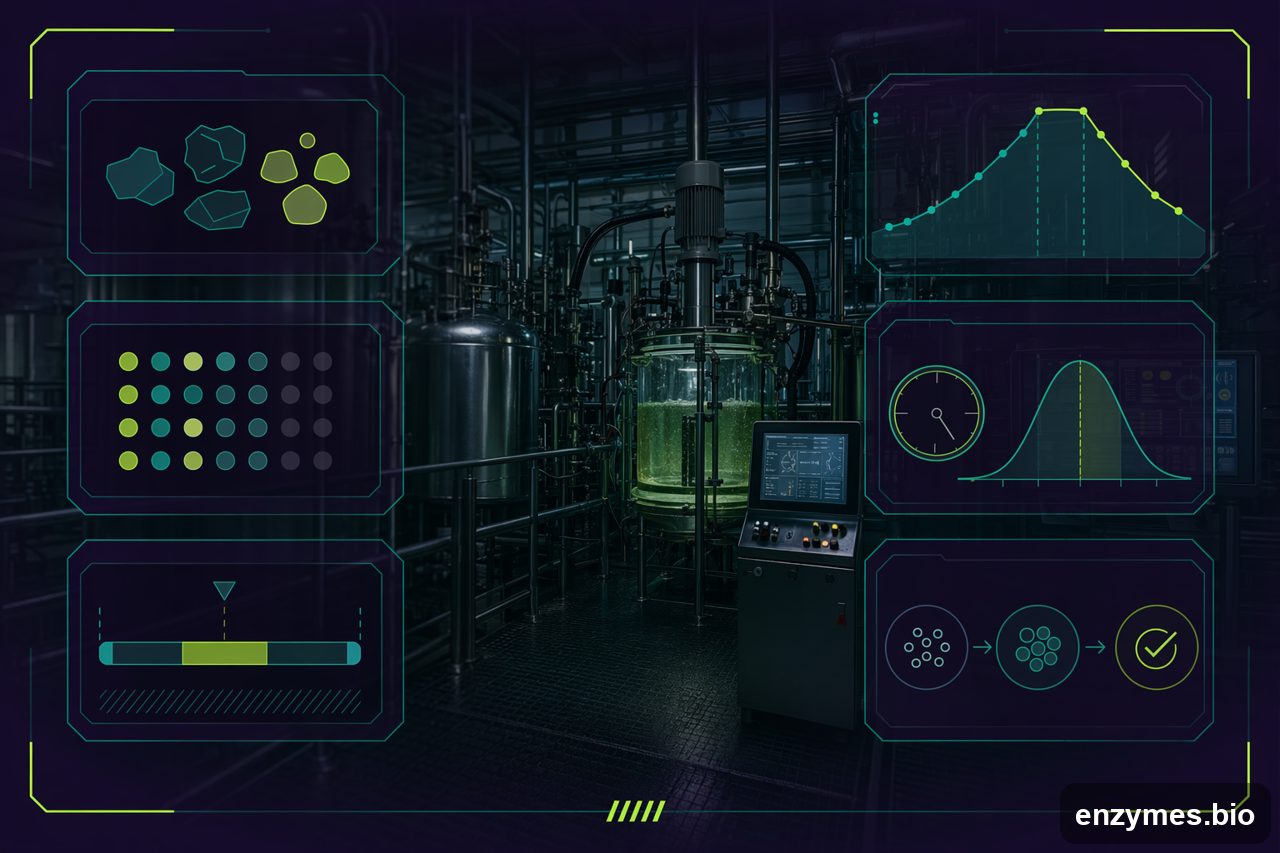
Typical evaluation criteria include:
- Substrate specificity requirements
- Product sensitivity to pH, heat, salts, shear, or hold time
- Compatibility with co-enzymes, metal ions, buffers, preservatives, or solvents
- Whether the phosphatase remains in the final process stream or must be removed
- Whether batch, fed-batch, continuous, or immobilized operation is more appropriate
Downstream treatment and process cleanup
Phosphate-bearing residues can complicate downstream processing in certain systems. A phosphatase step may be considered where targeted dephosphorylation helps simplify a later separation, reduce interfering species, or prepare a waste or side stream for treatment.
This use case requires careful controls. The enzyme must be compatible with the actual stream, including fermentation-derived solids, proteins, salts, surfactants, antifoams, cell debris, and cleaning carryover.
Process variables that matter
Phosphatase selection is driven by the real operating environment, not by a catalog label. Before recommending a route, Phosphatase Enzyme Solutions reviews the conditions that determine whether the enzyme can perform reliably at process scale.
Substrate class
Different phosphatases behave differently against sugar phosphates, nucleotides, protein-linked phosphate groups, organic phosphate esters, and mixed industrial matrices. The more complex the substrate pool, the more important selectivity becomes.
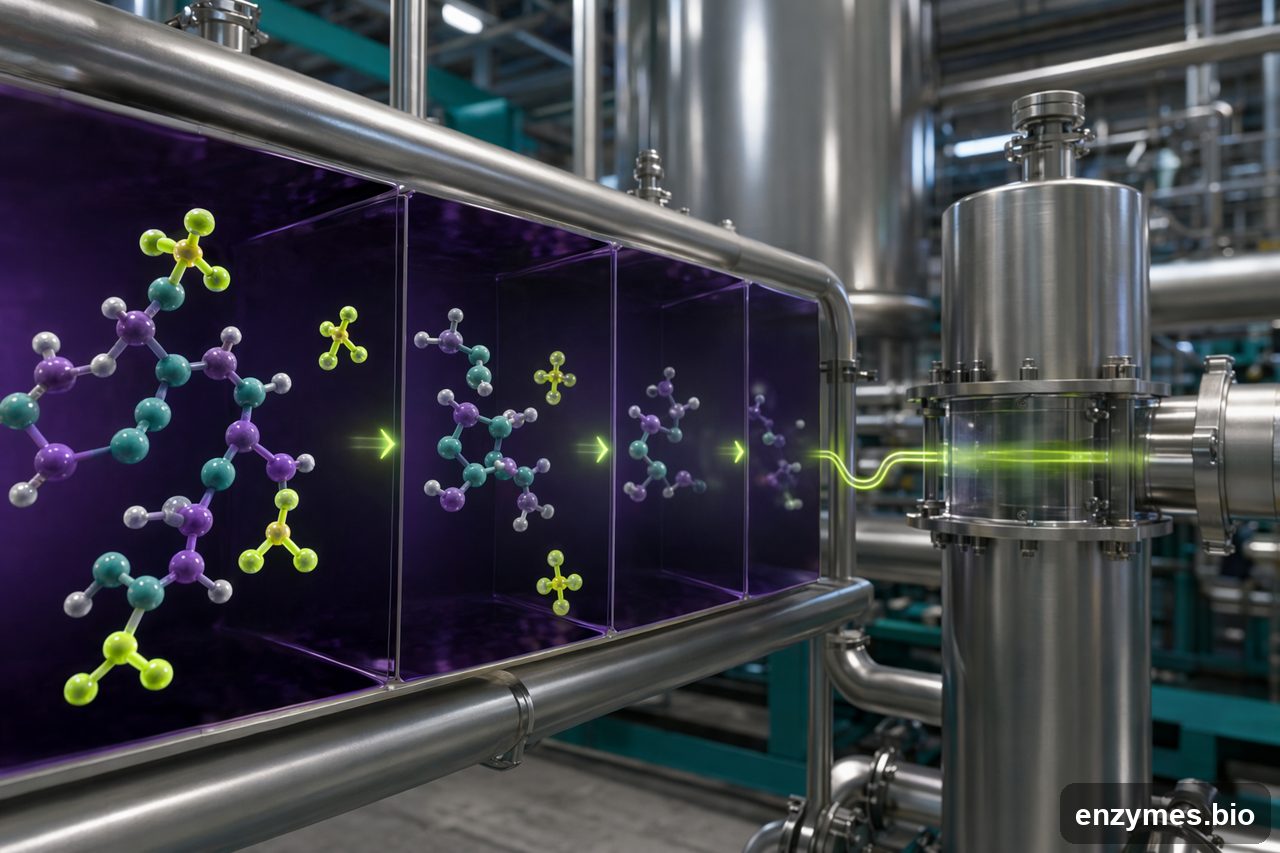
Matrix composition
Fermentation broths are rarely clean systems. Salts, buffers, residual sugars, proteins, metabolites, solvents, preservatives, antifoams, and trace metals can all influence enzyme behavior. Testing should use representative process material wherever possible.
Operating window
Temperature, pH, residence time, mixing profile, and addition point all affect process fit. A phosphatase that works in a simplified screen may still be unsuitable if the plant window is too narrow, too variable, or incompatible with product stability.
Stop, remove, or carry through
Every phosphatase step needs an endpoint strategy. Depending on the process, the enzyme may be inactivated, separated, immobilized, retained outside the main product stream, or allowed to carry into a non-sensitive downstream stage. This choice affects validation, quality control, cleaning, and cost.
Format considerations
Phosphatase Enzyme Solutions can support discussions around several implementation approaches, depending on the application and handling requirements.
- Liquid formats for metered addition and rapid dispersion in aqueous systems
- Dry formats where storage, shipping, or controlled reconstitution are priorities
- Immobilized or retained-enzyme concepts where reuse, separation, or containment may improve the process case
- Custom compatibility screening against customer-provided matrices and target operating conditions
The right format is usually determined by dosing control, storage conditions, process hold time, separation strategy, and documentation needs.
Buyer checklist for a phosphatase evaluation
To assess fit quickly, prepare the following information before technical review:
- Target substrate or substrate family
- Desired conversion outcome
- Process stage where the enzyme would be used
- Typical pH and temperature range
- Main salts, buffers, solvents, preservatives, or antifoams present
- Batch size or intended scale range
- Downstream separation or inactivation plan
- Product sensitivity and quality constraints
- Required documentation, allergen, regulatory, or origin preferences
- Target timeline for sampling, qualification, or production supply
How Phosphatase Enzyme Solutions supports fermentation and bioprocessing teams
Phosphatase Enzyme Solutions is built for technical purchasing and process development conversations. We help buyers narrow enzyme fit by application, process window, format, and supply requirement before moving into sample or commercial discussions.
You can contact us for:
- Phosphatase option review for fermentation and bioprocess streams
- Format recommendations for liquid, dry, or retained-enzyme use
- Matrix compatibility discussion
- Scale-up and handling considerations
- Commercial supply and pricing for qualified applications
Request a quote or get pricing
If your process includes a phosphate-linked bottleneck, share the process context below. Phosphatase Enzyme Solutions will respond through its own technical and commercial review process.