Phosphatase in Dairy and Beverage Process Contexts
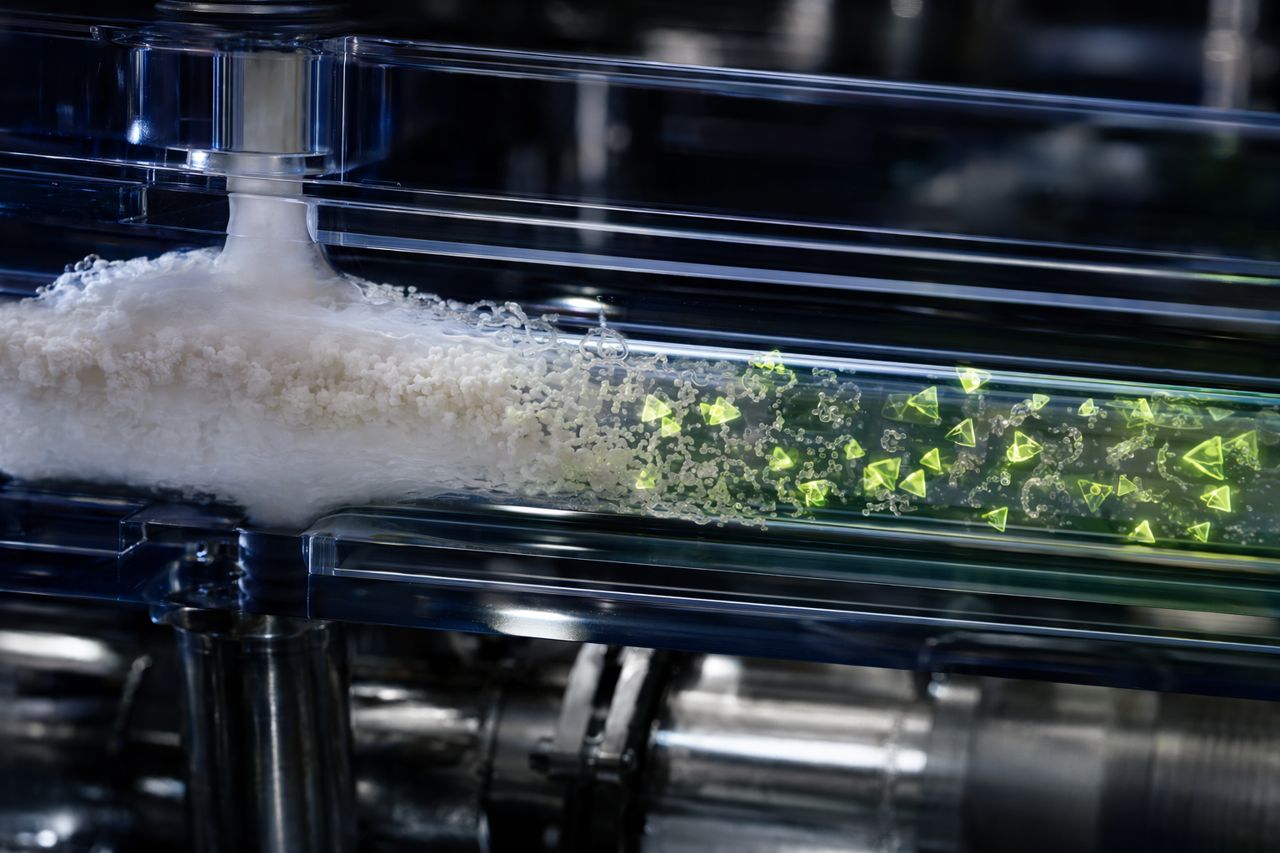
Dairy and beverage systems are liquid, mineral-rich, and highly matrix-dependent. In these environments, phosphatase is not a generic additive; it is a targeted processing tool for phosphate ester conversion, controlled ingredient modification, and selected monitoring or reference concepts.
Buying for production or for resale? Send the product or matrix, the quantity and the destination country, and we reply with a quotation. Request a quote.
Phosphatase Enzyme Solutions supplies phosphatase enzymes in bulk to dairy and beverage manufacturers, ingredient producers and distributors, on a quote-only basis, with clear technical positioning before work moves from bench into pilot or production evaluation. The focus is practical: where phosphate groups matter, where enzyme exposure is controllable, and where the process can be documented without overclaiming performance before matrix testing.

Where phosphatase is relevant
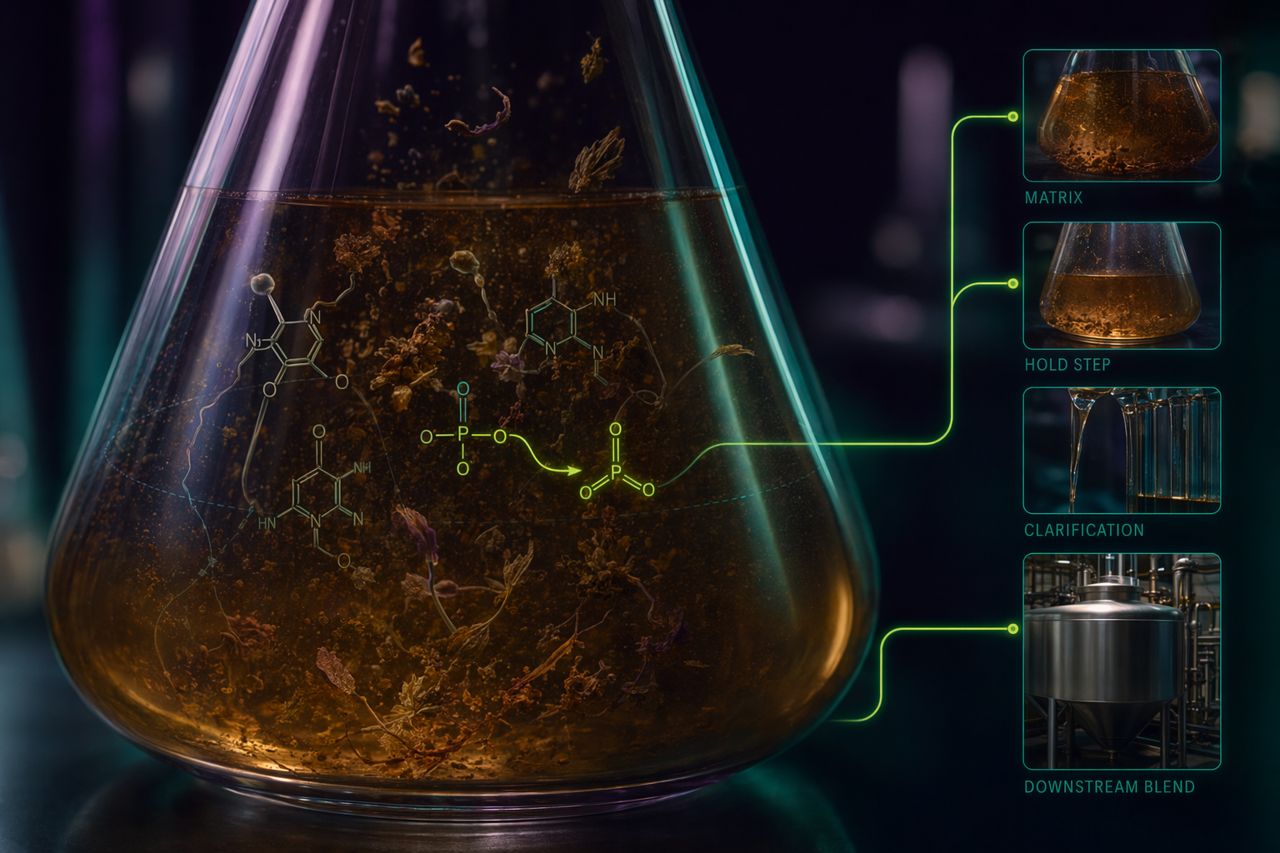
Phosphatase enzymes catalyze the removal of phosphate groups from phosphorylated molecules. In dairy and beverage process contexts, that can be relevant when the phosphate group influences solubility, mineral interaction, flavor development, analytical signal, clarification behavior, or downstream ingredient functionality.
Common evaluation areas include:
- Dairy-related research and process-monitoring concepts involving phosphatase behavior in milk-derived matrices
- Ingredient treatment for beverages containing plant extracts, fermented bases, nucleotides, or phosphorylated compounds
- Dephosphorylation of selected dairy proteins or protein fractions during formulation development
- Conversion of phosphate esters where phosphate release affects process interpretation or product behavior
- Reference or control materials used by technical teams studying phosphatase response in complex liquids
Phosphatase Enzyme Solutions does not position phosphatase as a substitute for validated regulatory pasteurization verification. For dairy compliance work, teams should use approved methods and qualified systems appropriate to their jurisdiction and product category.
Dairy process considerations

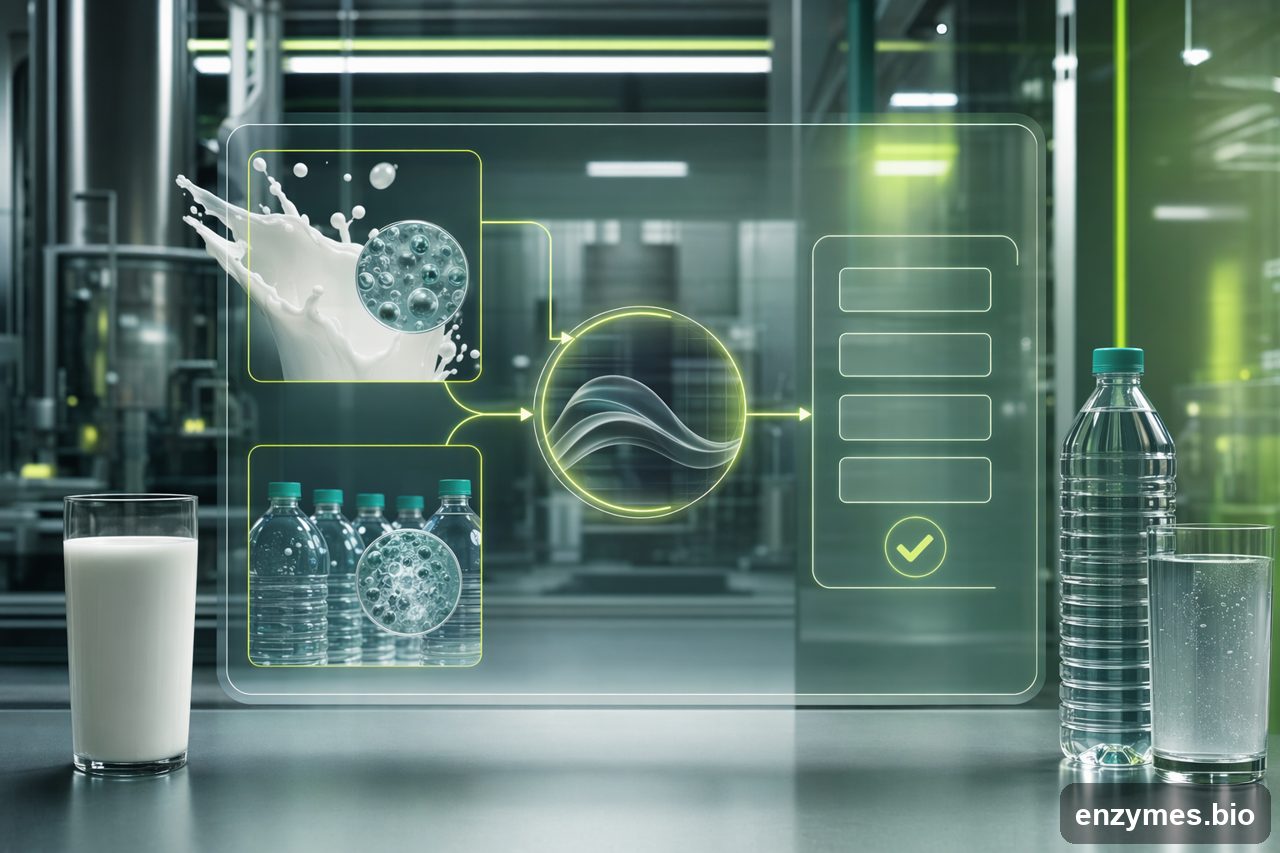
Dairy matrices are not simple aqueous systems. Proteins, calcium, phosphate salts, fat structure, lactose, stabilizers, and heat history all influence enzyme accessibility and process outcome.
Phosphatase may be evaluated in dairy-adjacent work when teams are studying:
- Casein or phosphoprotein behavior under defined processing conditions
- Mineral binding and release patterns during formulation development
- Enzyme response in milk-derived liquids, concentrates, or fractionated streams
- Reference behavior for process-monitoring concepts where phosphatase presence or absence is technically meaningful
- Compatibility with other enzymes used in dairy ingredient modification workflows
The main question is not whether phosphatase is active in principle. The main question is whether the target phosphate ester is accessible in the actual dairy matrix, under the intended time, temperature, pH, ionic, and solids conditions.
Beverage ingredient treatment
Beverage systems can include fruit materials, botanicals, grains, plant proteins, fermented substrates, vitamins, flavor precursors, stabilizers, and mineral systems. Some of these ingredients carry phosphate esters or phosphorylated compounds that may affect sensory profile, clarity, analytical behavior, or downstream conversion.
Phosphatase may be considered when a beverage development team needs to evaluate:
- Phosphate ester conversion in plant-based liquid ingredients
- Modification of phosphorylated flavor precursors or nucleotide-derived materials
- Treatment of fermented or enzyme-pretreated beverage bases
- Interaction with mineral balance, haze formation, or filtration behavior
- Preparation of intermediate ingredients before blending, stabilization, or packaging
Because beverages are often acidic, sweetened, preserved, carbonated, or thermally treated, phosphatase selection should be tied to the actual process window rather than a generic enzyme label.
What to define before selecting a phosphatase
A useful phosphatase recommendation starts with the process, not a catalog name. Before evaluation, define the conditions that will shape enzyme performance.
Key inputs include:
- Target matrix: milk-derived, plant-based, fermented, extract-based, or blended beverage
- Target substrate class: phosphoprotein, nucleotide, sugar phosphate, phytate-related material, or other phosphate ester
- Desired process result: conversion, signal reduction, ingredient modification, reference behavior, or analytical preparation
- Process window: cold-side addition, warm hold, pre-treatment, post-fermentation step, or ingredient-side treatment
- Matrix constraints: pH, salts, calcium, chelators, preservatives, stabilizers, solids, fat, alcohol, or carbonation
- Downstream exposure: filtration, heat treatment, blending, homogenization, concentration, drying, or packaging
- Documentation needs: grade expectations, allergen statements, origin information, regulatory support, and batch traceability
Phosphatase Enzyme Solutions can help translate those inputs into a practical enzyme evaluation pathway.
Formulation and processing variables
Phosphatase outcomes depend heavily on the local chemical environment. In dairy and beverage work, small shifts in pH, mineral strength, heat exposure, and ingredient order can change observed conversion.
Matrix accessibility
The enzyme can only act on phosphate groups it can reach. Protein conformation, particulate load, stabilizer systems, emulsions, and suspended botanical solids can all limit access.
Heat and hold strategy
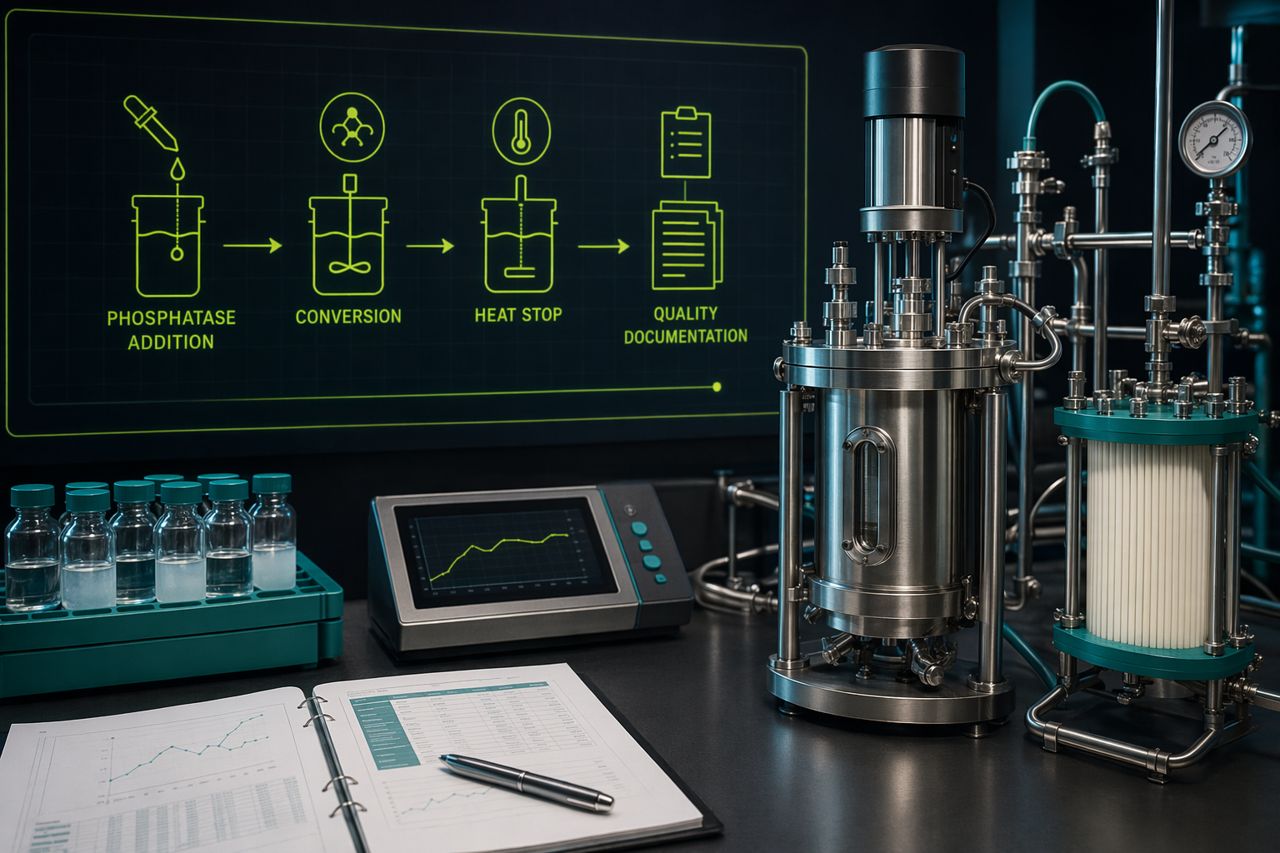
Some processes use phosphatase during a defined pre-treatment step, then stop or remove activity downstream. Others evaluate activity only during technical development or reference preparation. In either case, the heat history must be mapped clearly.
Mineral and ion effects
Calcium, magnesium, phosphate salts, chelators, and buffer systems can influence both substrate behavior and enzyme performance. This is especially important in dairy matrices and mineral-fortified beverages.
Process order
Adding phosphatase before fermentation, after fermentation, before clarification, or during ingredient-side treatment can produce different outcomes. Process order should be treated as a design variable, not an afterthought.
Quality and supply expectations
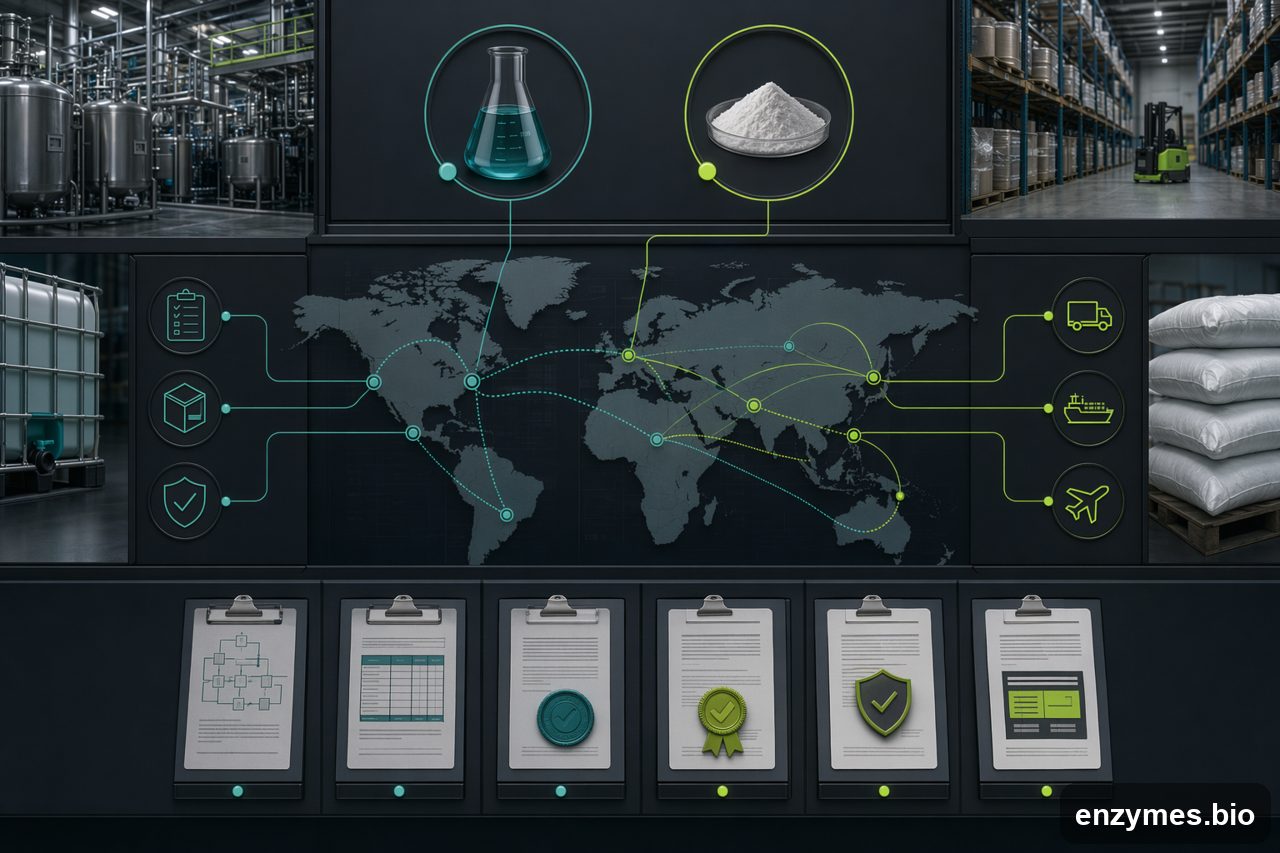
Industrial buyers typically need more than an enzyme name. They need a material that can fit internal qualification, documentation, and scale-up planning.
Phosphatase Enzyme Solutions supports phosphatase projects with:
- Grade selection aligned to intended industrial, food-adjacent, diagnostic, or technical use
- Batch documentation and traceability appropriate to B2B procurement workflows
- Compatibility discussion for liquid, dry, concentrate, and premix handling concepts
- Technical review of matrix and process constraints before quotation
- Supply planning for lab evaluation, pilot studies, and recurring production demand
No single phosphatase format is ideal for every dairy or beverage process. The correct supply choice depends on target substrate, liquid chemistry, documentation expectations, and how the enzyme will be introduced, held, and controlled.
Development pathway
A controlled evaluation usually follows four stages:
- Matrix definition — Confirm the liquid base, target phosphate ester class, process timing, and downstream constraints.
- Enzyme fit review — Select a phosphatase profile suitable for the expected pH, thermal exposure, and ingredient chemistry.
- Bench evaluation — Compare treated and untreated matrices using the buyer’s own analytical, sensory, or process criteria.
- Scale-up planning — Translate the selected condition into pilot handling, documentation, procurement, and production controls.
This structure keeps the project grounded in measurable process behavior rather than broad enzyme assumptions.
Request a wholesale quote
We supply phosphatase enzymes for dairy and beverage processing in bulk to manufacturers, biotech companies, distributors and resellers, on a quote-only basis. To get a recommendation and a price, send: the product or application, the quantity (evaluation lot, pilot volume or recurring production volume), the destination country, and the matrix and process step where the phosphatase will be used. Format and pack size are quoted per order; tell us your preference if you have one.